
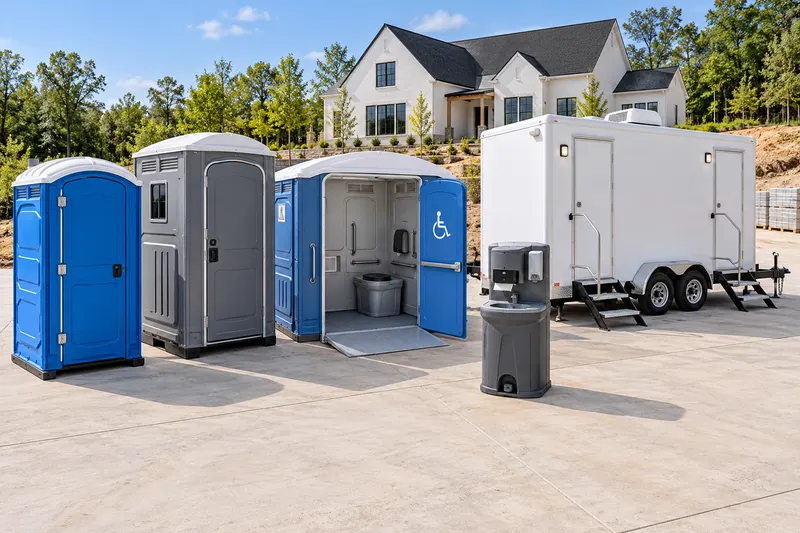
Draw the activities that share the entrance
List the people and vehicles using the proposed approach: residents, workers, material deliveries or a waste container. Show where each needs to pass. A toilet positioned in the only convenient unloading spot can create a daily conflict even if it looked unobstructed before work began.
Ask the provider to assess the proposed position and service access. Do not assume a narrow side passage is suitable merely because a person can walk through it.
Preserve the property's essential access
Discuss normal parking, refuse access and the route occupants use to enter or leave. If these arrangements must change, settle the alternative with the property owner before delivery. Do not make a neighbour's property or a shared route the unapproved solution.
Keep the toilet approach separate from material storage. Provide a washing arrangement suited to the workers rather than relying on a household kitchen or bathroom without agreement.
Check the setup after materials arrive
The first full workday is a useful time for the site contact to check whether the plan still functions. Report a blocked route or unsuitable position promptly and request a provider-approved adjustment.
Maintain the same access through the final cleanup. If a dumpster or contractor's vehicle arrives later, check that it does not prevent sanitation servicing or collection.
Questions before you book
Can a driveway accommodate both a dumpster and a toilet?
Possibly, but both providers need the complete layout and access information. Separate equipment footprints do not prove both vehicles can operate.
Should workers use the household restroom instead?
Only if the owner has agreed that access and it remains suitable throughout the work. Otherwise explain the outdoor facility need.